
Salary Sacrifice Explained – Benefits and Drawbacks
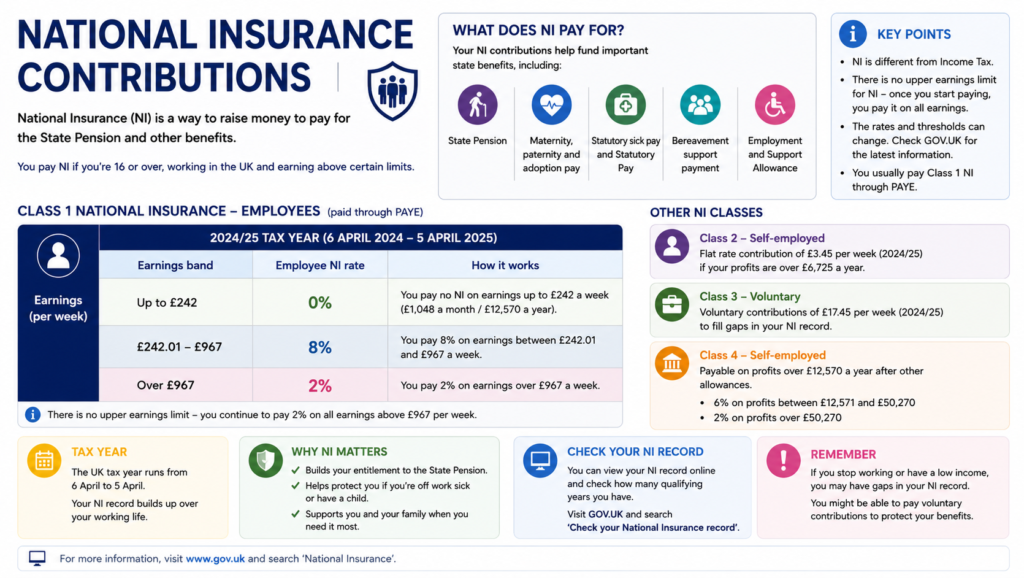
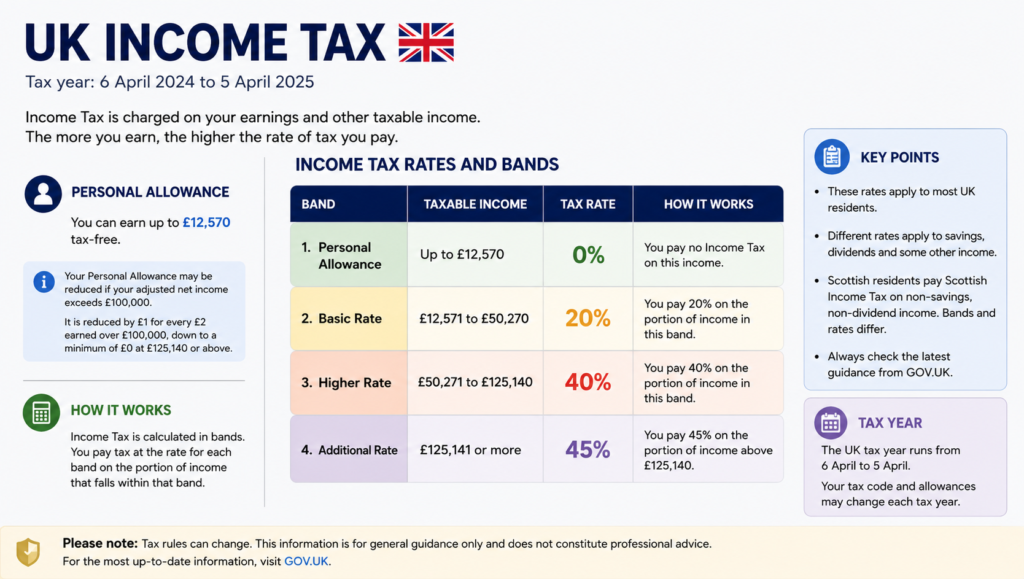
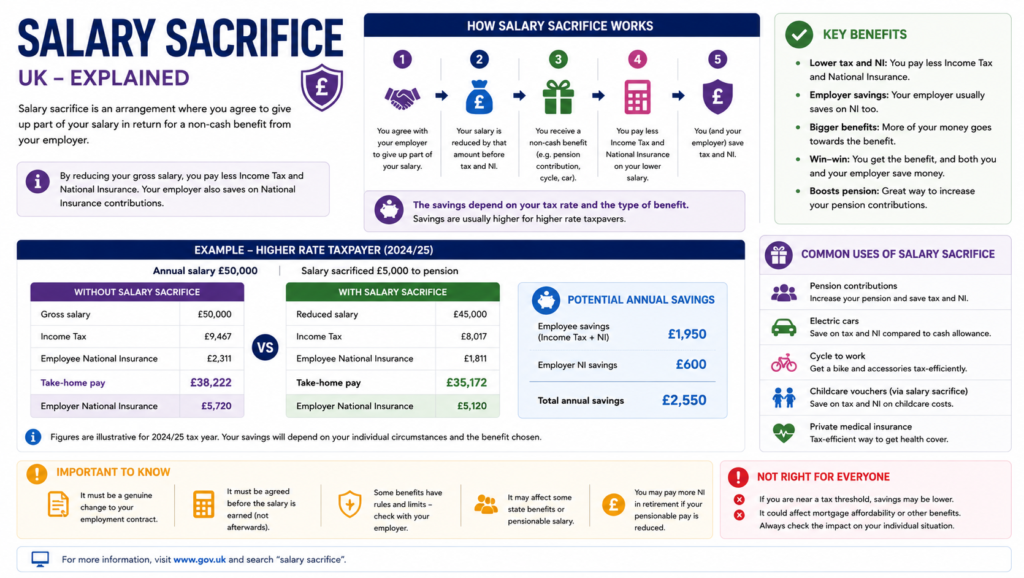
If you’ve seen “salary sacrifice” mentioned on your payslip, in a pension scheme, or in a cycle-to-work offer at your job, you’re not alone in wondering exactly what it means. It sounds complicated, but the idea behind it is actually quite simple once you break it down. In this guide, we’ll explain what salary sacrifice is, how it works in practice, and why so many UK employers offer it. We’ll also cover the real benefits and the genuine drawbacks — because while salary sacrifice can save you money, it isn’t the right choice for everyone. What Is Salary Sacrifice? Salary sacrifice is an arrangement between you and your employer where you agree to give up part of your salary in exchange for a non-cash benefit. Instead of receiving that portion of your pay as taxable income, it’s redirected into something like: Because your official salary is lower, you pay less Income Tax and less National Insurance on that reduced amount. Your employer also pays less employer National Insurance, which is why many businesses are happy to offer these schemes. Simple example: Say you earn £30,000 a year and agree to sacrifice £2,000 into your pension. Your taxable salary drops to £28,000. You still get the £2,000 — it just goes into your pension pot instead of your bank account, and you avoid paying tax and National Insurance on it. Visit Now: https://www.taxsal.com/ How Does Salary Sacrifice Work? The process itself is straightforward, but it does require a formal agreement between you and your employer. Here’s how it typically works step by step: This is the key point people often miss: it’s not that you’re avoiding paying for the benefit. You’re still paying for it — just before tax is taken out, rather than after. Common Types of Salary Sacrifice Schemes Not all salary sacrifice schemes work the same way. Here’s a quick breakdown of the most common ones in the UK. Scheme Type What It’s Used For Typical Saving Pension contributions Boosting retirement savings Tax + NI savings on contributions Cycle to Work Buying a bike and equipment Up to 40% off retail price Electric car leasing Leasing an EV through your employer Lower tax than company car schemes Childcare vouchers Paying for registered childcare Tax and NI savings (legacy scheme, closed to new joiners) Additional holiday Buying extra annual leave No tax saving, but useful for work-life balance Pension salary sacrifice is by far the most widely used, since almost every employer offers a workplace pension and the tax savings are significant over time. Benefits of Salary Sacrifice 1. Lower Income Tax and National Insurance This is the main attraction. Because your taxable salary is reduced, you pay less tax and less National Insurance overall. For higher earners, this can also help keep income below key thresholds — like avoiding the tapering of the Personal Allowance above £100,000. 2. Employer Savings Can Be Passed Back to You Employers save on National Insurance too. Many pass some or all of this saving back into your pension as an extra contribution, effectively boosting your retirement pot for free. 3. Bigger Pension Pot Over Time Because contributions go in before tax, more money ends up in your pension compared to contributing the same amount from your take-home pay. Over 20–30 years, this difference compounds significantly. 4. Access to Discounted Benefits Schemes like Cycle to Work or EV leasing let you access products at a lower effective cost than buying them outright, since you’re paying with pre-tax income. 5. No Extra Admin for Employees Once you’re signed up, the scheme runs automatically through payroll. There’s no need to claim anything back or fill out extra tax forms each year. Read More: Take Home Pay Calculator UK – Calculate Your Net Salary After Tax Drawbacks of Salary Sacrifice 1. Lower Official Salary Because your contractual salary drops, this can affect things tied to your salary level, such as: 2. Reduced State Pension Entitlement (in Rare Cases) If your salary drops too close to the National Insurance Lower Earnings Limit, it could affect your qualifying years for the State Pension. This is uncommon but worth checking if you’re on a lower salary. 3. It’s Not Always Reversible Quickly Salary sacrifice arrangements are usually set for a minimum period, often 12 months. If your circumstances change — say you need the extra take-home pay back — you may not be able to opt out immediately. 4. Not Suitable for Everyone If you’re close to the minimum wage, salary sacrifice generally isn’t allowed, since it can’t reduce your pay below the National Minimum Wage or National Living Wage. 5. Impacts Statutory Payments If you’re planning to take maternity or paternity leave soon, a lower salary could reduce the amount of statutory pay you receive, since it’s often calculated based on average earnings. Salary Sacrifice vs Regular Pension Contributions Feature Salary Sacrifice Standard Contribution Tax relief Automatic, no tax paid at all on sacrificed amount Tax relief claimed afterward National Insurance saving Yes No Employer NI saving passed on Sometimes No Effect on official salary Lower Unchanged Effect on mortgage applications Can lower borrowing amount No effect This comparison shows why salary sacrifice is often more efficient — but also why the salary reduction matters for anyone applying for credit or a mortgage soon. Is Salary Sacrifice Right for You? Salary sacrifice tends to work best if: It may be worth avoiding or reconsidering if: If you’re unsure, it’s worth speaking to your payroll or HR team, or a financial adviser, before committing — especially for larger sacrifices like pension contributions. Final Thoughts Salary sacrifice is one of the simplest ways to make your salary work harder — lowering your tax bill while boosting your pension or accessing valuable benefits like cycle schemes or electric car leasing. For most people, especially those focused on long-term pension growth, it’s a smart, tax-efficient option. That said, it’s not a one-size-fits-all solution. If you’re planning a mortgage application, expecting statutory