What Is a Take Home Pay Calculator?
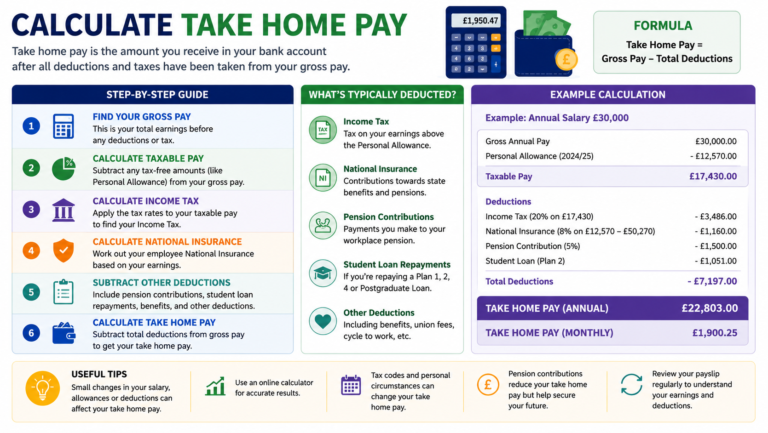
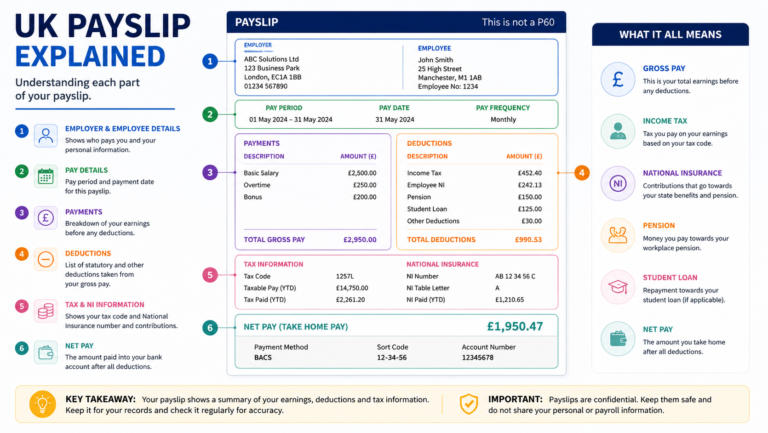
A take home pay calculator helps you understand how much money you may actually receive after the main salary deductions. Your gross salary is the amount before deductions. Your take-home pay, also called net pay, is the amount left after Income Tax, National Insurance, pension contributions, student loan repayments, and any salary sacrifice.
This UK take-home pay calculator is built to make the process simple. Instead of working through tax bands and deductions by hand, you can enter your salary details and get a clear estimate in seconds. It is useful when you are comparing jobs, planning a budget, checking a pay rise, or trying to understand what a new salary could mean each month.
How to Use This Calculator
- Enter your gross salary before tax and deductions.
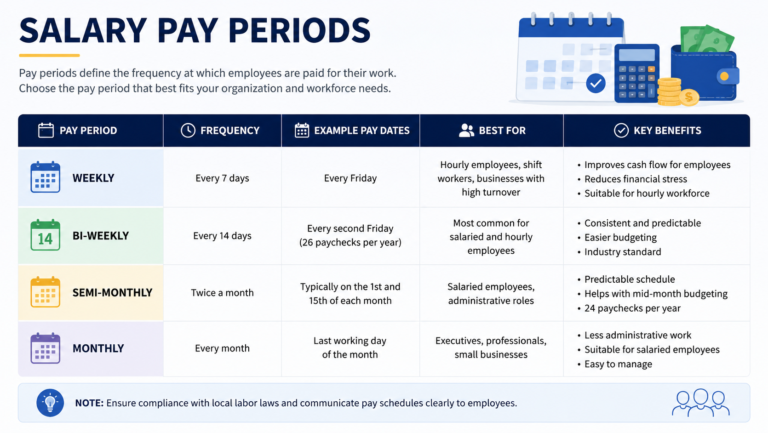
- Choose whether the amount is yearly, monthly, weekly, daily, or hourly.
- Select the 2026 / 27 tax year and check your tax code.
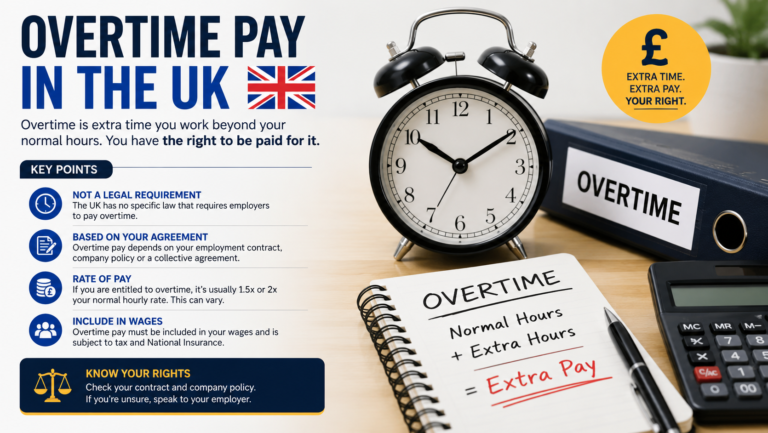
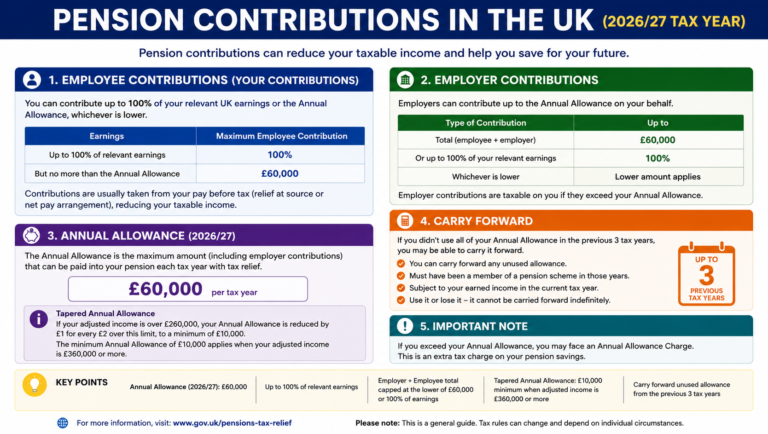
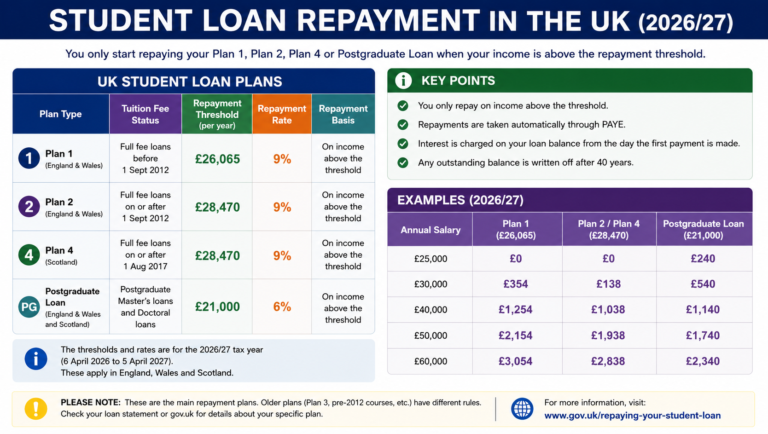
- Add your pension percentage, student loan plan, overtime, bonus, and salary sacrifice if they apply.
- Press Calculate to see annual, monthly, weekly, daily, and hourly take-home pay.
What the Result Shows
The results panel shows your estimated gross pay, Income Tax, National Insurance, pension contribution, student loan deduction, total deductions, and take-home pay. You can switch the result tabs to view your pay annually, monthly, weekly, daily, or hourly.
The deduction chart gives a quick visual breakdown, so you can see how much of your salary is kept as take-home pay and how much goes toward regular deductions.
What Affects Your Take Home Pay in the UK?
Your take-home pay depends on more than just your salary. Two people can earn the same gross salary but receive different net pay because their tax code, pension contribution, student loan plan, or salary sacrifice is different.
Gross Salary
Gross salary is your pay before anything is deducted. It can include your basic salary, overtime, bonus payments, and other taxable income from your job.
Income Tax
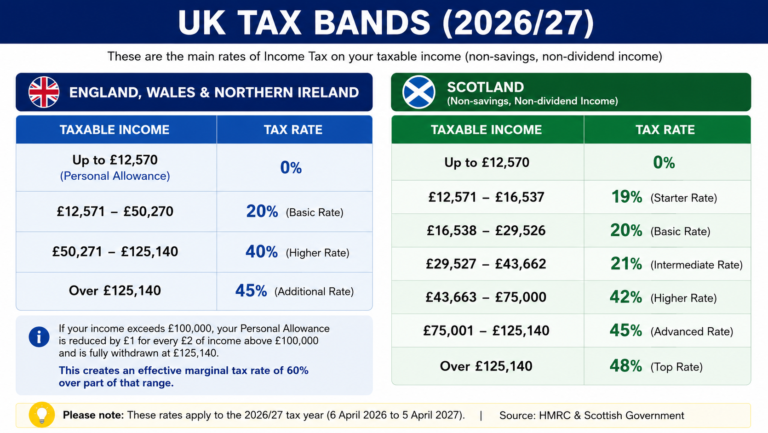
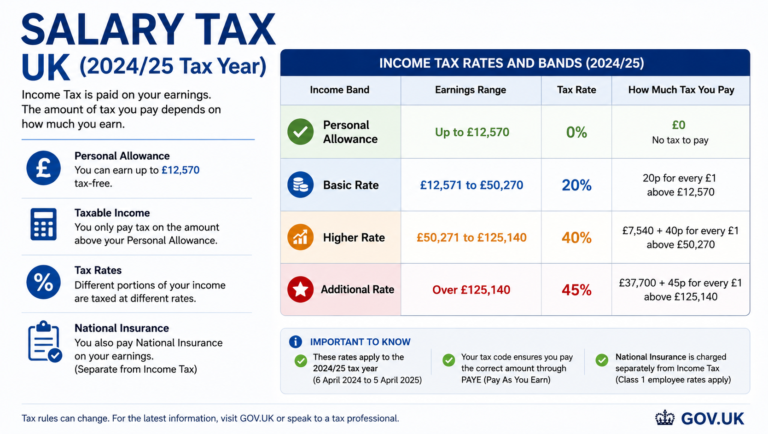
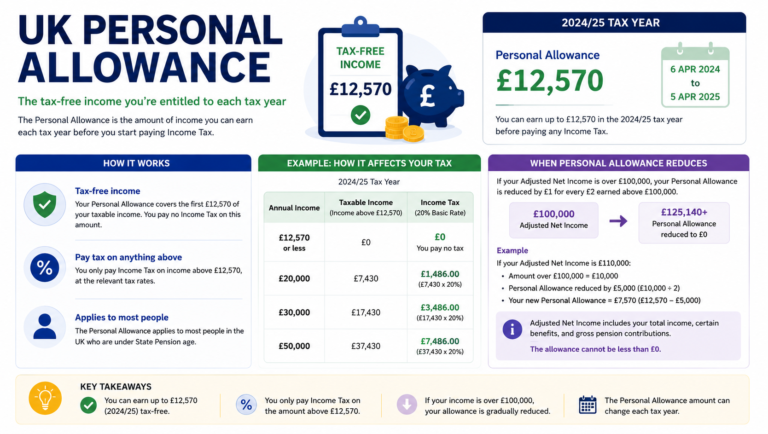
Income Tax is charged on taxable earnings after your personal allowance and tax code are considered. Higher income can move part of your pay into higher tax bands.
National Insurance
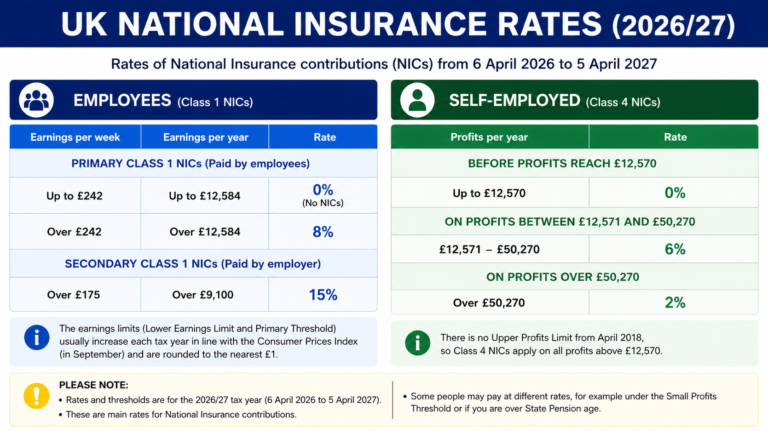
National Insurance is usually deducted through PAYE. It helps fund state benefits and services. The amount depends on how much you earn above the relevant threshold.
Pension Contributions
A pension contribution reduces the money you receive today, but it helps build retirement savings. In this calculator, pension is estimated as a percentage of gross pay.
Student Loan Repayments
If you have a UK student loan, repayments normally start when your income goes above your plan threshold. This calculator includes Plan 1, Plan 2, Plan 4, Plan 5, and postgraduate loan options.
Salary Sacrifice
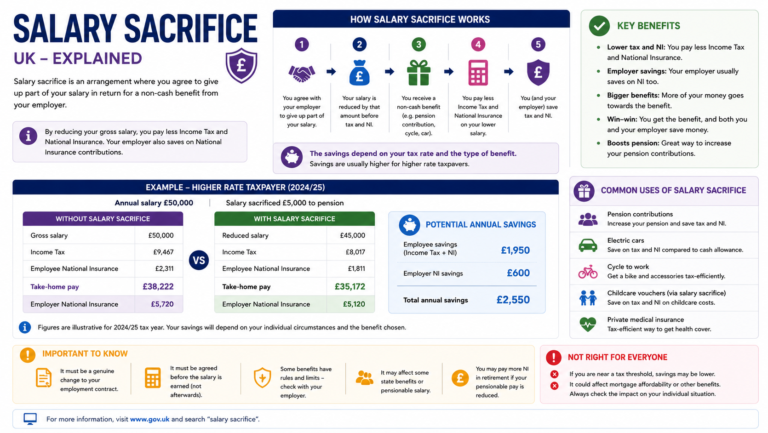
Salary sacrifice is an amount you give up before tax for a benefit, such as pension or another workplace scheme. It can reduce taxable pay, but it also changes the salary used in the estimate.
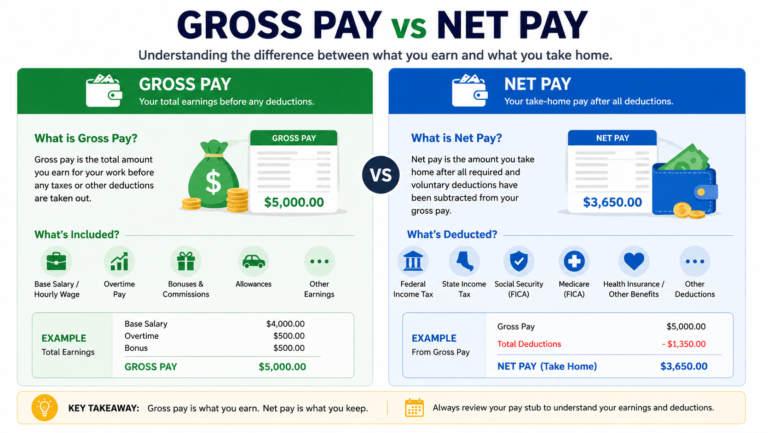
Gross Pay vs Net Pay
Gross pay is the full amount you earn before deductions. Net pay is the amount that usually reaches your bank account. For example, if your gross monthly pay is £3,000 and your total deductions are £600, your estimated net pay would be £2,400.
This is why it is important to look beyond the headline salary. A salary may look strong on paper, but the amount you can spend each month depends on the deductions taken from it.
Simple formula: Gross Pay - Total Deductions = Estimated Take Home Pay.
Why This Calculator Is Useful
A take-home pay calculator is helpful when you want a quick answer without opening a spreadsheet or reading long tax tables. It can help you plan rent, mortgage payments, savings, bills, and day-to-day spending with a more realistic income figure.
You can also use it before accepting a new job offer. Enter the salary, add your pension and student loan details, and compare the monthly take-home pay with your current income. This makes it easier to judge whether a pay rise, overtime, or bonus will make a real difference after deductions.
Take Home Pay Calculator UK FAQs
Is this calculator exact?
No. It gives an estimate based on the details you enter and the rules used in the tool. Your real payslip can be different because of benefits, workplace pension rules, tax code changes, regional tax rules, payroll timing, or other deductions.
What is a tax code?
A tax code tells your employer how much tax-free income to apply before deducting Income Tax. The default code used here is 1257L, which is common, but your own code may be different.
Does pension reduce take-home pay?
Yes. Pension contributions usually reduce the amount you receive in your pay, but they are savings for retirement. The impact depends on your contribution percentage and how your pension scheme is set up.
Does overtime or bonus affect tax?
Yes. Overtime and bonus payments can increase taxable income, so they may also increase Income Tax, National Insurance, and student loan deductions.
Is Scottish Income Tax included?
This calculator is a general UK estimate and uses standard Income Tax bands. Scottish Income Tax bands can be different, so Scottish taxpayers should treat the result as a guide only.
Final Note
The Take Home Pay Calculator UK is designed for quick salary planning. It helps you see what may be left after common deductions, but it should not replace your payslip, payroll department, HMRC guidance, or professional financial advice. For the most accurate figure, always check your actual tax code, pension setup, student loan plan, and payslip details.